Evaluating the Value of Reupholstering vs. Replacement
Sentimental Value and Heirloom Pieces
The true measure of a piece’s worth rarely appears on a price tag. We often find ourselves standing before a chair that has absorbed decades of laughter, tears, and quiet Sunday afternoons, and the numerical cost of replacement feels irrelevant. This is where the calculus of sentimentality becomes far more significant than any spreadsheet.
Consider the familial archives held within the fibers of an heirloom. A Victorian settee that survived an ocean voyage from Europe carries a narrative that a new showroom model simply cannot replicate. Such pieces possess a soul, a patina of history that makes furniture reupholstery charleston sc a compelling act of preservation rather than mere maintenance. We are not just fixing a frame; we are honoring a lineage.
When weighing your decision, consider the intangible, yet tangible, assets of the old:
– The quality of old-growth hardwoods no longer available in mass manufacturing.
– The intricate, hand-carved details that cannot be sourced in modern catalogues.
– The unique, one-of-a-kind silhouette that anchors a room’s character.
– The emotional connection to a grandparent’s favorite reading spot.
For these reasons, the decision frequently transcends economics. The cost of new furniture can be staggering, yet that expense purchases no memories, no stories. Reupholstering allows us to fuse our modern comfort standards with the enduring soul of the past. It’s a transaction with history. A skilled artisan can transform a tired shell into a vibrant centerpiece, ensuring the legacy continues for another generation. The value, in these instances, is priceless.
Environmental Impact of Furniture Restoration
Each year, millions of tons of furniture find their way to landfills, a statistic that weighs heavily on the conscience. When evaluating the value of reupholstering versus replacement, the environmental ledger often tips the scale. The carbon footprint of a new sofa extends far beyond the showroom, encompassing raw material extraction, factory emissions, and transcontinental shipping.
Furniture reupholstery charleston sc offers a counterpoint to this cycle of consumption. By preserving the existing frame, we reduce demand for virgin hardwoods and synthetic foams. A skilled restorer can extend a piece’s life by decades, keeping it from becoming waste.
- Textile waste from discarded upholstery strains local waste management.
- Old-growth frames require immense energy to replace.
- Refinishing materials carry their own environmental cost.
Restoration is not a guilt-free act, but it is a deliberate one. The calculation shifts when we see the landfill as the alternative.
Comparing Costs: Reupholstery vs. New Furniture
A new sofa can cost less at checkout and more across a decade. I weigh replacement against repair by isolating the frame, foam, fabric, and labour rather than judging the showroom price alone. A sound hardwood frame alters the calculation.
For furniture reupholstery charleston sc, the cost comparison usually includes:
- Fabric yardage and pattern repeat.
- Labour for stripping, cutting, and fitting.
- Replacement foam density and suspension repairs.
- Delivery or collection for the finished piece.
New furniture carries its own freight and assembly charges. Reupholstery concentrates spending on visible materials and skilled handwork. I find that a quote becomes useful only when it lists these variables side by side.
Quality Craftsmanship and Longevity
Few showrooms will confess the skeleton hidden beneath their plush upholstery. I have seen mass produced frames assembled from particleboard and stapled webbing, pieces designed to survive only until the first rigorous house move. Furniture reupholstery charleston sc professionals witness this daily, stripping away the outer skin to reveal the bones beneath. When you reupholster, you retain the hardwood architecture that has already proven its resilience through years of daily use. That interior guarantee is a quiet form of certainty.
The replacement piece offers a pristine exterior, but the unknown lies in the seat deck and the corner blocks. A properly rebuilt piece involves more than new fabric. The professional examines the webbing, tightens the springs, and replaces compromised joinery before a single yard of textile is cut. This process transforms the item into something that serves for another decade.
The craftsman’s work is judged in the details most people never see:
– Eight way hand tied springs that distribute weight evenly
– Cold cured foam with a higher density rating than standard retail cushions
– Precise seam placement that aligns the fabric pattern across every panel
Reupholstering does not repeat the factory process; it corrects the factory’s shortcuts. This is the principal difference. A newly purchased piece may match your decor for a season, but the reupholstered frame retains a structural integrity that mass manufacturing rarely replicates. The outcome is a piece that outlasts its commercial counterpart, carrying the quiet signature of skilled handwork rather than the anonymous assembly line.
The Comprehensive Reupholstery Process
Assessment and Consultation
Grandma’s chaise lounge has visible wear, but a professional locates hidden issues during the assessment. We lift cushions, inspect webbing for sag, and probe springs for weakness. This forensic exam reveals frame integrity. A consultation follows. You select fabric, we finalize cording and seam placement. The plan solidifies before any staple touches wood. The standard process includes:
- Frame stability evaluation
- Spring and webbing inspection
- Fabric condition analysis
This upfront scrutiny prevents expensive errors. For furniture reupholstery charleston sc clients, such diligence turns guesswork into certainty.
Fabric Selection and Measurement
That moment when you realize the perfect fabric is less about color and more about arithmetic. Most people walk into a showroom believing they are choosing a shade, when in truth they are solving a geometry problem. The yardage requirements for a three-seater sofa differ wildly from those of a wingback chair, and the pattern repeat can double your fabric needs if the print is bold and the seamstress is honest.
The tactile experience matters too. A fabric with a tight weave will outlast a loosely woven alternative by years, even if both look identical from across the room. You should run your palm across the material, fold it, and test its recovery. The best upholsterers in the trade will guide you toward performance fabrics that resist fading and abrasion, especially for pieces near sunny windows or in high traffic areas.
Measurement is where precision becomes paramount. An expert measures every surface, accounting for armrolls, seat cushions, and back panels, then adds a margin for pattern matching and seam alignment. This is not guesswork. This is applied mathematics with a needle and thread. When you engage professionals for furniture reupholstery charleston sc, they will often produce a cutting diagram before a single swatch is ordered. This diagram accounts for:
– Pattern repeats and nap direction
– Cushion welting and piping requirements
– Hidden panels where fabric could be conserved
This level of detail ensures your ordered fabric arrives without a shortage, which is a common and costly mistake when amateurs attempt the project. The same care applies to the fabric’s backing, which affects stretch and durability. And for furniture reupholstery charleston sc, the humid coastal climate demands breathable materials that resist mold and mildew accumulation beneath the cushions. The professional will also note the difference between the fabric’s face and its backing, as some materials curl or shift during the pulling and stretching process. A skilled hand knows how to account for these dynamics, measuring three times and cutting once, so the final piece fits like a tailored suit. The result is a reupholstered item that feels as though it was born with that fabric, not merely dressed in it. That confidence comes from the math being right before the first staple gun fires.
Stripping and Frame Repair
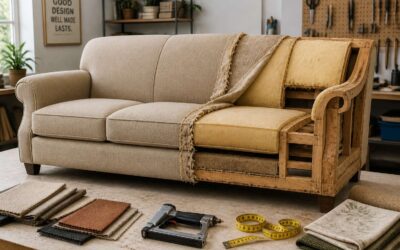
Stripping a piece to its bones is an act of archaeology. The old fabric comes away in ragged shrouds, and beneath it, the frame stands exposed, bearing the scars of every sitting, every move, every argument that happened upon its cushions. I have found letters, coins, and once a child’s shoe wedged beneath the webbing. The past does not let go easily.
Frame repair is where the dead are brought back. Loose joints are disassembled, old glue is scraped from the mortise and tenon, and fresh adhesive is applied with precision. The wood must be true. For furniture reupholstery charleston sc, this is the stage that separates resurrection from mere cosmetics. The technician examines:
– Corner block integrity and screw holes that have been stripped
– Webbing attachment points for signs of splitting
– Rail alignment and spring anchor security
Each repair restores the skeleton. Only then does furniture reupholstery charleston sc grant the chair its next life.
Reupholstering and Assembly
The frame is sound. Now the chair must be rebuilt. In furniture reupholstery charleston sc, the reupholstering process begins with fresh webbing stretched taut across the rails. Springs are retied and aligned by hand. This base layer determines how the piece will sit for the next decade.
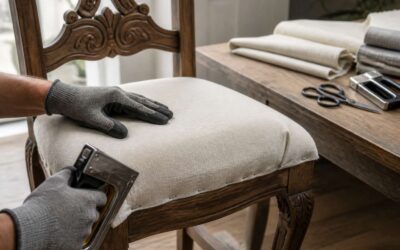
Padding follows. Layers of foam, cotton, and polyester are sculpted to match the original silhouette. A muslin lining is pulled over the padding to hold everything in place. The final fabric is laid out, cut, and sewn with double-stitched seams. A good technician aligns stripes and plaids at the seams.
Assembly brings the pieces together. The upholsterer attaches the seat, back, and arms, then works out wrinkles and adjusts for symmetry. I never skip the final checks:
- Seam alignment across the cushions
- Fabric tension on the arm fronts
- Trim and welt placement
Legs are reattached. The piece is inspected and returned.
Final Touch-Ups and Delivery
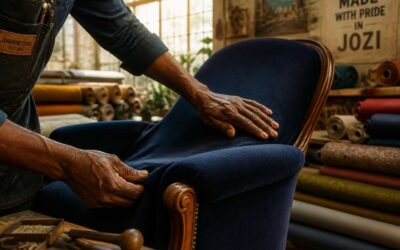
The final inspection happens under raking light, which reveals ripples invisible to the naked eye. I run my hands over every seam. A slight puckering at the arm front means we remove the panel and redo it. In furniture reupholstery charleston sc, this level of attention separates a professional outcome from a passable one.
Touch-ups are methodical. We steam away pressure marks, clip every loose thread, and polish legs to match the original finish. We test the frame for creaks before the piece is wrapped:
- Steam the fabric to relax tension marks
- Clip all loose threads
- Check the frame for squeaks by applying pressure to each joint
Delivery is careful. The piece travels wrapped in moving blankets. We position it exactly where you want it, unwrap it, and step back. For furniture reupholstery charleston sc, the last impression completes the experience.
Choosing Fabrics for Charleston’s Climate and Lifestyle
Durable Fabrics for High-Traffic Areas
Charleston’s humidity can wreck the wrong fabric. A sofa in a sunroom or a family den faces moisture, salt air, and constant use. The right upholstery resists all three.
We recommend solution-dyed acrylics or tightly woven polyesters. They handle sunlight without fading and wipe clean after sandy beach days. For homes with kids or pets, look for a high rub count, above 30,000 double rubs. That number means the fabric survives years of daily sitting.
– Crypton offers stain resistance without the stiff feel.
– Sunbrella excels in high-moisture spaces.
– Performance velvet adds softness while staying durable.
A skilled furniture reupholstery charleston sc service can guide you through these choices. They know which backings breathe and which trap heat. Choose wisely, and your reupholstered piece will last decades, even in this coastal climate.
Moisture-Resistant and Sun-Resistant Materials
When the Lowcountry sun hits a window at four in the afternoon, it does not negotiate. Fabrics fade, fibers break down, and the weave itself can become brittle. The solution is not to avoid the light, but to choose materials that treat it as a non-event. Pigment is the first line of defense. Look for solution-dyed fabrics, where the color is part of the fiber itself, not a surface coat. This matters more in Charleston than in drier regions.
Moisture is the quieter enemy. Humidity sits in the air and works its way into the cushions long before you see a stain. A fabric that resists water penetration prevents mold and mildew from taking hold in the padding underneath. The performance you want is not a slick surface, but a tight weave that discourages moisture from settling in.
– Breathable backings allow air to circulate, reducing trapped heat and dampness.
– Lighter colors reflect sunlight, minimizing the thermal load on the fibers.
– Blends with polyester offer resilience without sacrificing the natural feel of cotton or linen.
A professional furniture reupholstery charleston sc service examines the room’s orientation before cutting a single yard. They assess how the piece sits relative to windows, doors, and coastal breezes. The choice of fabric is a structural decision, not just a decorative one. Get it right, and the piece holds its shape and color through years of intense summer light and salty air.
Eco-Friendly and Sustainable Options
The fabric you choose is a negotiation with Charleston’s living patterns. A formal damask feels out of place in a home where dogs and children move freely. Performance velvets and textured weaves handle daily contact without demanding constant care. We often see clients who love pale neutrals, but the reality of sandy feet and sweet tea requires a more forgiving palette.
Sustainable options matter in a coastal city that values its natural habitat. Natural fibres like hemp and organic cotton are breathable and renewable. Low-impact dyes reduce chemical runoff into local waterways. Reupholstering a treasured frame using eco-conscious materials lessens the demand for new furniture production. The skill of furniture reupholstery charleston sc artisans extends the life of quality pieces while respecting environmental limits.
- Coir and jute backings provide structure with renewable sourcing.
- Recycled polyester threads offer durability without virgin plastic.
- Plant-based tanning for leather alternatives avoids heavy metal waste.
These choices align with a lifestyle that values longevity and responsibility. A professional furniture reupholstery charleston sc service can source materials that match your aesthetic and your ethics.
Style Trends in Lowcountry Interiors
In the Lowcountry, a piece of furniture must answer two masters: the Atlantic’s humidity and the easy pace of porch living. We see it in the way a flaky jute rug survives a summer storm, or how a cotton slipcover fades gracefully in a sun-drenched conservatory. Your upholstery is not merely decor; it is a participant in your daily ritual. Choosing fabrics for Charleston’s climate means forsaking stiff formality for materials that breathe and yield, a choice that shapes the very essence of a room’s atmosphere.
The most compelling narrative in interior design right now is one of deliberate contrast. Trendsetters pair the weight of a sturdy linen with the casualness of a well-worn leather. They are not chasing perfection but capturing a lived-in authenticity. Within our work, the shell of a classic wingback becomes a canvas for a bold, tropically inspired print, while its companion pieces remain in serene, neutral weaves. This dialogue between bold and quiet defines a space that feels curated rather than decorated. It is this ability to translate a personal story into tactile reality that elevates the work of furniture reupholstery charleston sc specialists beyond mere repair.
The climate here dictates a certain intelligence in selection. We often lean into these textural narratives:
– Smooth, tightly woven cottons that repel the inevitable morning drizzle.
– Cloud-like bouclés that offer comfort without the heaviness of deep pile.
– Linen blends that develop a soft patina, mirroring the natural weathering of our coastal landscape.
A design should feel like a natural extension of the environment, not a stubborn imposition upon it. As we work with clients, we encourage them to see their upholstery as a living layer of their home’s history. A chair is a vessel for an afternoon nap, a place for a hushed conversation, a perch from which to watch the seasons change. When those needs are met, a house becomes a haven. Choosing a local service for your furniture reupholstery charleston sc ensures your pieces are adapted to these intimate rhythms. Through the careful selection of color and pattern, we help in translating this connection. We help bridge the divide between the effortless elegance of the coast and the practicalities of the home.
Finding Trusted Upholsterers in the Charleston Area
Researching Local Craftsmen
Finding a craftsman who treats your beloved pieces with the reverence they deserve requires patience. A quick online search for furniture reupholstery charleston sc returns a long list of names, but reputation is built on more than flashy websites. The best way to start is by asking local antique dealers or interior designers who they trust with their own projects. These professionals often know which workshops handle intricate work without cutting corners.
When you visit potential workshops, pay attention to the details. A reputable shop will be organized and busy, with visible works in progress. You want to see evidence of solid frame construction and precise stitching. Feel the materials they use and ask about their process for older furniture. The right artisan will ask you questions too, about your lifestyle and how you intend to use the piece.
A trustworthy professional should offer clear communication. Look for these qualities when making your choice:
– Willingness to show you examples of completed work
– Transparent pricing with a written estimate
– A portfolio that includes repairs to frames and springs
– Honest assessments of your piece’s condition
The artisan’s workspace speaks volumes about their discipline. A clean, well-lit studio with organized fabric rolls and proper equipment suggests a certain standard of care. This attention to environment often translates directly to the final product. When you find a shop that values order and precision, the journey toward furniture reupholstery charleston sc becomes less about chance and more about informed selection. The real narrative of a well-made chair is told in the hands of the person restoring it.
Questions to Ask Before Hiring
Garage sales and estate auctions are not the only places where furniture goes to die. Sometimes, the living room sofa merely enters a state of suspended animation, waiting for a professional with a staple gun and a steady hand. The average American chair sits in a state of neglect for over a decade before anyone calls about furniture reupholstery charleston sc. That is a long time to hide a bad pattern under a throw blanket.
When you finally decide to act, the interview process begins. You are not just hiring a service; you are employing a surgeon for your favorite reading chair. Before you hand over a single cushion, you need to ask questions that separate the true artisans from the folks who just own a sewing machine.
Ask about their process for dealing with horsehair and burlap. Ask if they replace webbing or just patch it. Ask about the foam density they recommend for a seat that gets daily use. The answers tell you more than any portfolio photo ever could.
A professional should be able to explain the difference between a tack strip and a double welt. They should discuss the merits of eight-way hand tied springs without you having to ask. The conversation should feel like a consultation with a specialist, not a transaction at a drive through.
Here are a few questions to sort the wheat from the chaff:
1. Do you remove the old fabric completely, or do you layer over existing materials?
2. Can you show me examples of chairs with similar curved or tufted details?
3. What is your specific process for addressing a broken frame corner?
4. Do you offer a warranty on the labor and the new fabric?
Listen for hesitation. A confident yes to these questions indicates a workshop that handles the gritty reality of old furniture every day. A mumbled maybe suggests they are better at taking money than taking measurements.
The price of furniture reupholstery charleston sc often shocks people who have only ever bought flat packed items. The shock fades when you realize the cost includes a rebuilt frame, new springs, and fabric that actually fits without wrinkles. You are paying for the skill to turn a lumpy mess into a crisp silhouette. That skill does not come from a YouTube tutorial. It comes from years of wrestling with stubborn tacks and fragile antique wood. Ensure the person you hire has the scars to prove it.
Ultimately, trust is built on the little details. The careful way they wrap a roll of fabric. The precision of their piping. The way they flinch when you mention a staple gun. Find that person, and your furniture will outlive your next three sofas.
Reviewing Portfolios and Testimonials
Finding a reliable shop for furniture reupholstery charleston sc often begins with a deep dive into the work of local craftsmen. A dedicated portfolio reveals more than just finished pieces. It shows how a professional handles the specific curves of a wingback chair or the tight corners of a tufted ottoman. Look for consistent seam alignment and crisp piping in the photos. Those details separate a meticulous artisan from someone who simply stretches fabric over a frame.
Testimonials offer a window into the entire experience, from the initial consultation to the final delivery. Past clients will often mention if the project came in on time or if the workshop communicated clearly about unexpected frame issues. You want feedback that speaks to the handling of complications. The true test happens when an upholsterer encounters rotted webbing or a cracked leg. Their reputation depends on how they manage that reality.
Ask to see samples of their current work, not just the highlights from years past. A workshop with a steady flow of projects shows demand and experience.
– Check if they work with both modern furniture and antique pieces.
– Ask about their process for matching complex fabrics.
– Enquire about the lead time for a custom project.
The most reliable craftsmen often have a waitlist. That wait signals quality and a reputation built on results. When you visit the workshop, notice the state of the machinery and the organisation of the material racks. A chaotic space rarely produces precise work. The right person for furniture reupholstery charleston sc will take the time to discuss your piece as if it were their own. Their pride in the craft shows through in every interaction.
Understanding Pricing and Quotes
The price of furniture reupholstery charleston sc rarely matches your initial guess. Trusted upholsterers in the Charleston area base quotes on a physical inspection, not a photo. They check frame joints, webbing, and foam density before committing to numbers. If a shop gives a price over the phone without seeing the piece, expect the final cost to change.
A proper quote breaks down each cost. You should see fabric, labor, and replacement materials listed separately. Some workshops add a contingency for hidden damage. Ask about that, and I mean really ask! Also ask who does the actual stitching. Outsourcing that step might save money but lose control.
- Is the estimate valid for 30 days?
- What happens if the fabric you want is discontinued?
- Does the quote include delivery and setup?
Clarity here protects your wallet and your nerves when you choose furniture reupholstery charleston sc.
Turnaround Times and Scheduling
Turnaround times for furniture reupholstery charleston sc depend entirely on the frame’s condition and the design’s complexity. A simple dining chair might return in two weeks, while a camelback sofa with channel tufting can consume six weeks or more. Trusted workshops in the Charleston area keep a visible schedule and tell you if a timeline shifts.
Booking early matters, more than most people expect! The finest upholsterers often run three to four weeks ahead, especially before summer. You want a written start date and a written completion date, not a vague promise.
1. Ask how many projects sit ahead of yours.
2. Ask if they source fabric before or after your slot opens.
3. Ask when you will receive a progress call.
The wait becomes easier when the shop flags delays, because fabric backorders do happen. Good scheduling and good stitching both require discipline. That discipline makes furniture reupholstery charleston sc worth the patience.
Caring for Your Reupholstered Furniture
Routine Cleaning and Maintenance
The upholsterer understands that fabric is a promise. When we deliver furniture reupholstery charleston sc, we pass that promise to you. Routine cleaning honors the thread and the frame beneath.
Vacuum weekly with a soft brush attachment. Grit gathers between cushions and acts like fine sandpaper. A damp cloth handles most spills without drama.
– Rotate loose cushions monthly so wear settles evenly.
– Keep the piece out of direct sun to slow fading.
– Blot spills immediately with a dry towel.
The cloth will soften where you sit. It will crease where you rest your arm. That is not wear. That is the furniture learning your shape. A properly maintained piece carries decades of that memory, and it will keep carrying it long after the hands that made it are gone.
Protecting Against Sun and Humidity
Charleston’s weather has a personality, and it is not shy. One hour the sun is aggressive enough to fade a navy cushion to periwinkle. The next, the air is thick with salt and moisture that settles into the fibers. Furniture reupholstery charleston sc shops see the aftermath of both extremes. That new fabric, whether a durable performance weave or a delicate linen, needs a strategy against the elements.
Sun exposure is the silent enemy. UV rays break down the dyes and the structural integrity of the thread. A piece placed directly in a south facing window will lose its vibrancy within a single season. The solution is not to live in a cave. It is to rotate the furniture’s position periodically or use window treatments that filter the light without blocking it entirely. Humidity is the other culprit. The Lowcountry air carries enough moisture to make the wood frame swell and the batting clump.
Consider the placement of the piece relative to vents and exterior doors. A steady flow of damp air will do more damage than a single water spill.
– Use a dehumidifier in the room during the peak summer months.
– Keep the piece at least a few inches away from exterior walls to allow airflow.
– Check the fabric for mold or mildew spots after prolonged rainy stretches.
– Avoid placing the furniture near a frequently opened door that lets in humid air.
The frame and the fill material are part of the reupholstery investment. Protecting them from the climate is just as important as protecting the visible fabric. A piece that sits in a controlled environment will hold its shape and comfort. The sun and the salt air will keep testing your choices. Your job is to make sure the furniture wins.
Repairing Minor Scuffs and Tears
Neglect is a slow erosion, a quiet undoing that visits every piece of furniture eventually. The first scuff arrives like a scar from a memory, a scrape from a careless heel or a dragged chair leg. A tear in the fabric is more insidious, a thin line that widens with each use. The impulse is to panic, to perform a hasty patch that makes the damage worse. Resist that urge. Assess the wound first, because the repair method depends on the fabric and the location of the damage.
Fresh tears on a reupholstered seat require a steady hand and the right adhesive. A small tear along a seam can be coaxed closed with fabric glue and a gentle press, held until the bond sets. A clean cut on a flat surface might allow for a discreet patch from the underside, using a matching piece of fabric and a fusible web. For scuffs, the approach is entirely different. A gentle rub with a damp cloth sometimes lifts the mark, especially on performance fabrics. For deeper gouges, a fabric repair kit with a silicone-based filler can level the surface, though the color match will never be perfect.
Here is a simple protocol for addressing the most common mishaps:
1. Clean the area around the damage with a soft brush to remove dust and debris.
2. For tears, apply the adhesive sparingly with a toothpick, then press the edges together.
3. For scuffs, test the repair kit on a hidden area first to confirm the color is acceptable.
4. Allow the repair to cure fully for 24 hours before placing weight on the spot.
The reupholstered piece carries your history now. Every mark on it tells a story of use, of life lived in the Lowcountry heat. The furniture reupholstery charleston sc craftsmen who rebuilt the frame understood that. They knew the piece would face more than just the sun and the salt air. They knew it would face you. Your family. Your accidents. The repair work you do at home is the final chapter of their labor, a commitment to keep the piece intact for another decade. A small scar does not diminish the piece; it gives it character, and a character that is well maintained becomes an heirloom. The goal is not to render the damage invisible, but to stop it from spreading, to seal the wound so the structure remains sound. That is the quiet duty of ownership.
When to Consider Future Reupholstery
Every fabric has a breaking point. The first sign is a subtle thinning, a sheen on the seat cushion that no brush can restore. The springs may creak where they once were silent. That is the frame telling you it is tired.
Before reaching for a throw blanket, consider the timeline. A well kept reupholstered piece should give you ten to fifteen years. If you approach that mark and the fabric fades unevenly, or the cushions lose their shape, call a furniture reupholstery charleston sc professional. Their eye will catch what yours has learned to ignore:
- Worn seams that split under pressure
- Cushion foam that never springs back
- Wood showing through the frame joints
When the structure holds but the covering is beyond rescue, reupholstery is the honest next step. In my experience, owners hesitate here too long. You are not replacing history. You are giving it another decade.

0 Comments