The Value of Professional Upholstery Renewal
Extending the Lifespan of Your Beloved Furniture
Every thread pulled from an old sofa carries the imprint of its owners, yet most households discard furniture at the first sign of wear. Professional upholstery renewal transforms that impulse into preservation. In reupholstery johannesburg, skilled hands rebuild frames, reseat springs, and tailor new covers with precision. This process extends a cherished piece’s lifespan by decades. What appears as a simple refresh involves:
- Reinforcing weakened wooden joints
- Replacing deteriorated foam with high density alternatives
- Reattaching webbing that supports proper posture
Each step returns structure and comfort. The original character remains, only renewed. This renewal avoids landfill waste while keeping a familiar seat alive. It is an investment in memory, not merely furniture.
Cost-Effectiveness Compared to Buying New
From a financial perspective, the arithmetic is merciless. Buying new furniture in South Africa can cost thousands of rands, and that figure grows yearly. Professional reupholstery johannesburg services, on the other hand, typically charge a fraction of that, often between thirty and fifty percent less than a comparable new purchase. This is not a compromise; it is a capital decision.
That cost covers far more than fabric. It includes:
- Stripping the frame down to its bones for structural inspection.
- Replacing webbing and corner blocks that prevent sagging.
- Installing high-density foam that holds its shape for years.
When you calculate the cost per year of use, the renewed piece wins easily. You preserve your original investment and avoid retail markups. For quality craftsmanship that makes this possible, reupholstery johannesburg offers a logical path forward.
Environmental Benefits of Reusing and Restoring
Furniture waste is one of the fastest growing streams in South African landfills. Choosing reupholstery johannesburg keeps sturdy frames and quality timber out of the dump, avoiding the heavy carbon cost of new manufacturing.
Professional renewal adds value through inspection and repair. An upholsterer will find hidden damage, reset joints, and restore the internal skeleton. That craftsmanship turns a tired sofa into a piece that lasts another generation!
- No new trees cut for the frame.
- No fossil fuels burned for virgin foam.
- No packaging or shipping weight added.
Every restored item represents a direct reduction in raw material extraction. That is the environmental benefit of skilled work.
Preserving Sentimental and Antique Value
An antique chair in a Johannesburg home may carry more memory than monetary value. The original fabric, worn by decades of use, has witnessed a family’s most significant moments. Professional reupholstery johannesburg services understand this. These craftspeople stabilise loose joints, preserve original timber, and match period-specific materials.
The renewal process protects the details that give an antique its character. Original hand-carved arms remain untouched. The frame’s aged patina stays intact. What changes is the structural integrity and the comfort!
Professional renewal preserves:
- The original frame and timber
- Carved details and ornaments
- The piece’s provenance and story
A faithful restoration allows a treasured piece to remain functional while retaining its authentic character.
Understanding the Reupholstery Process
Initial Consultation and Detailed Assessment
Most people expect the reupholstery johannesburg process to begin with fabric swatches. It does not. It starts with a thorough examination of your sofa’s structure. During the initial consultation, we turn the piece over, check for woodworm, assess the webbing, and identify whether those creaks are structural or theatrical. In Johannesburg’s dry winters, wood that has shrunk and joints that have loosened are common discoveries.
This detailed assessment separates the savable from the sacrificial. We look for:
- Bent springs that have lost their bounce
- Frames weakened by years of enthusiastic sitting
- Foam that has surrendered to gravity
We measure twice, photograph problem areas, and note original construction methods so the new fabric respects the old engineering.
We also read the furniture’s history through its dents, stains, and previous repair attempts. These all shape the plan. This consultation is where reupholstery johannesburg professionals show their value.
Selecting Fabric and Measuring Requirements
Once the structure passes inspection, the conversation shifts to fabric. Fabric selection determines the final cost more than any other decision. Price per meter only tells part of the story. Pattern repeats, fabric width, and nap direction all affect how much material you need. A bold geometric print on a three-seater can consume twice the fabric of a plain weave, because the pattern must align across every cushion and seam.
Measuring requirements is a technical exercise. We calculate from the frame, not from the old covers. The variables extend beyond simple length and width:
- Foam thickness and density for seat and back inserts
- Arm height and width, which dictate separate fabric panels
- Skirt depth or the absence of a skirt entirely
For reupholstery johannesburg, clients often choose fabrics on colour alone. The abrasion test, measured in rubs, tells you whether the material survives daily use. Upholstery-grade fabric should exceed 15,000 rubs for a living room sofa. Below that, you are buying a temporary solution for your reupholstery johannesburg project.
Stripping Old Upholstery and Inspecting the Frame
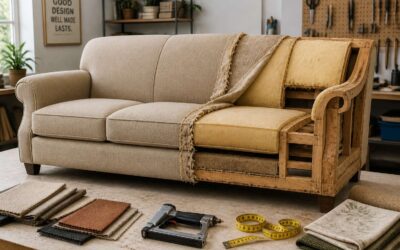
Underneath that faded floral print lies the truth. Stripping the old upholstery is demolition work. Every staple, tack, and snapped hog ring gets pulled, often with a muttered apology to the original craftsman. The foam comes out in crumbles. The webbing reveals its decades of silent suffering.
Then comes the frame inspection. This is where reupholstery johannesburg separates the worthwhile from the wallet-draining. We check joints, legs, and rails. A loose corner block is fixable. Broken hardwood is not. If the frame cracks under pressure, no fabric will save it.
For a reupholstery johannesburg project, the frame inspection determines viability. The upholsterer looks for:
- Loose or missing joint blocks
- Splits in the hardwood rails
- Compromised webbing or springs
- Signs of woodworm or rot
Finding a solid frame underneath the mess is the best possible outcome. The investment is sound, and the next layer of fabric actually has something to cling to.
Repairing Springs, Padding, and Structural Elements
Once the frame passes inspection, the true resurrection begins. Reupholstery johannesburg workshops face their first real test: the springs. A sagging coil set can gut the comfort of any sofa. Each spring gets retied with twine, or replaced entirely when rust has won the fight. Skilled hands in reupholstery johannesburg matter most here, because no shortcut survives contact with a seated human.
Padding follows. Modern foam blends replace the crumbling horsehair and cotton wadding of yesteryear. We build up layers, shaping the seat to match the original silhouette.
Structural elements also demand attention:
- Replacing broken webbing with new jute or rubberised straps
- Re-gluing and clamping loose corner blocks
- Adding plywood support panels where the old ones bowed
This stage remains invisible in the finished piece. But without it, the new fabric would sag within a year. The work is quiet, methodical, and vital!
Final Upholstering and Professional Finishing Touches
The final upholstering is where reupholstery johannesburg truly reveals its craft. Fabric is stretched, aligned, and secured with precision. Pattern matching at the seams requires patience. A single misaligned stripe can undo the entire silhouette.
Trimming and tacking follow. Craftsmen add piping, button tufting, and decorative nails. Each detail receives the same attention as the structural work beneath.
- Evening out the fabric tension along the arms
- Reinforcing the dust cover underneath the frame
- Attaching new feet or castors for stability
The final inspection catches every flaw. Professional finishing touches turn a repaired frame into a restored centerpiece. What emerges is furniture with decades of life ahead.
Popular Furniture Pieces for Upholstery Restoration
Sofas and Couches: Transforming Your Living Space
Few pieces in your home absorb as much wear as the sofa. Yet when the upholstery fades or tears, many homeowners assume the entire piece is finished. In reality, the frame beneath often remains sturdy for decades. A professional reupholstery johannesburg service can revive a tired sectional or an inherited antique chaise, changing the room’s character without replacing the costliest element.
- The compact two-seater, ideal for apartments.
- The sprawling sectional, which needs careful seam work.
- The button-backed Victorian sofa, requiring precise tufting.
Each style demands specific skills, from handling curved railings to matching pattern repeats. The result is a transformed living space where your favourite seat looks brand new while keeping its original comfort.
Dining Chairs: Bringing Elegance Back to Mealtimes
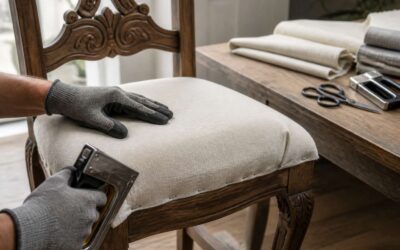
Every dining chair hides a history, its padding compressed by generations of elbows. When the covering frays, most assume the piece is finished. But reupholstery johannesburg returns it to a sturdier existence. I have seen a tired spindle-back with torn webbing and a sagging spring become a chair that endures. The process is an audit of the frame, checking for warped rails or broken dowels. Consider the afflictions:
- The front seat rail, bowed from years of sliding.
- The foam, dusty powder.
- The webbing, torn and useless.
Each demands a skilled hand to rebuild the foundation before laying new fabric. Stripping the old covering reveals the horsehair and the craftsman’s last hammer blow. When the new upholstery is pulled taut, the chair holds the next decade of meals. It is continuity, a refusal of the throwaway age. That is a meal worth sitting down for and reupholstery johannesburg makes it possible!
Headboards: Adding Comfort and Style to Bedrooms
The headboard endures a peculiar solitude. It witnesses the quiet hours, the restless turnings, the dreams that dissolve by dawn. When its fabric grows thin or the padding develops a permanent hollow, the entire room loses its anchor. Reupholstery johannesburg gives this piece a second chapter. I have worked on headboards where the batting had compacted into a hard shell, offering no comfort at all.
The restoration begins with removing the outer layer. Beneath it, the frame often reveals its true condition. Some have broken slats where the occupant leaned back to read. Others have loose joints that creak in the night. A professional rebuilds these foundations first. New foam is cut and sculpted to provide proper support, not merely a soft surface.
The fabric choice alters the character of the room entirely.
– A textured linen invites touch.
– A dark velvet absorbs the evening light.
– A durable weave resists the oils from hair and skin.
Each option transforms the headboard into a statement of comfort. The finished piece does more than decorate; it supports the weight of sleep and rest. That is the quiet purpose of this work. It is a craft that understands the bedroom as a sanctuary, and reupholstery johannesburg ensures it remains so.
Office Chairs: Ergonomics and Aesthetics Combined
People spend more than 1,700 hours per year in their office chairs, and the upholstery bears the evidence! I have seen foam collapse into a hard sheet, leaving the occupant to feel the plywood base pressing into their legs. Reupholstery johannesburg fixes this problem at the source.
A qualified restorer replaces the worn foam with high-density material suited to your weight and posture. The fabric choice affects breathability, stain resistance, and how the chair reflects your professional image.
What usually fails on an office chair:
- The seat cushion loses its resilience.
- The armrest padding splits at the seams.
- The backrest fabric becomes shiny and worn.
- The base mechanism may still function, but the chair looks abandoned.
Rebuilding the padding and covering the frame preserves the ergonomic geometry that your body has adapted to. Reupholstery johannesburg returns the chair to a condition that supports productivity and looks professional.
Vintage and Antique Furniture: Preserving History
A Victorian armchair carries the imprint of every hand that has touched it. The horsehair stuffing has settled. The damask has lost its original lustre. Yet the frame remains true. Reupholstery johannesburg breathes new life into these pieces while honouring their provenance.
Restoring antique furniture demands a different touch than modern work. Original materials tell a story: the jute webbing, the hand-tied springs, the tacking patterns. A skilled restorer studies these details before dismantling.
What deserves attention with vintage pieces:
- The timber frame may need gentle structural repair rather than replacement.
- Original horsehair or coir padding should be preserved where possible.
- Fabric selection must respect the era without sacrificing durability.
Each restoration is an act of conservation. The chair continues its journey, ready for another century of use.
Choosing the Right Fabric and Materials
Natural vs. Synthetic Fabrics: Pros and Cons
Selecting the right textile for your upholstery project is a decision that shapes both comfort and longevity. In the variable climate we experience in Johannesburg, where harsh summer sunlight and dry winter air take their toll, the material you choose must align with your practical needs. Natural fibres like linen, cotton, and wool offer breathability and a tactile richness that synthetic blends rarely match. However, these organic options often require more careful maintenance and can fade more rapidly when placed near sun-facing windows.
Synthetic fabrics such as polyester, nylon, and olefin deliver impressive resilience. They resist staining, moisture, and abrasion, making them a sensible choice for households with children or pets. The trade-off often appears in the hand feel and the way the fabric drapes over curves and cushions.
When comparing materials, consider the following distinctions:
– Linen and cotton provide a crisp, airy finish but crease easily and may shrink if improperly cleaned.
– Wool offers natural elasticity and flame resistance, yet it can be prone to moth damage.
– Polyester and acrylic blends hold colour well and withstand heavy daily use without losing shape.
– Olefin excels in outdoor or high-moisture zones, but its texture can feel more utilitarian.
The success of any reupholstery johannesburg project rests on pairing the right substrate with the appropriate weave. A reputable workroom will examine your existing frame and seating structure before recommending a fabric, ensuring the material’s weight and stretch suit the piece. Over time, the performance of a quality textile depends as much on its composition as on the skill of the craftspeople who stretch and secure it. Understanding these trade-offs allows you to make an informed choice rather than a guess.
Durability and Wear Resistance for High-Traffic Homes
In a bustling Johannesburg home, the fabric you select faces sustained punishment from foot traffic, energetic children, and the occasional spilled cooldrink. Martindale rub counts matter more than aesthetics alone. A rating above 30,000 indicates a textile engineered for relentless use, while lighter weaves may pill within months.
Consider these hardwearing options:
– Performance velvet with crushed pile that hides impressions
– Tightly woven microfibres that repel liquids on contact
– Crypton-treated canvas with built-in antimicrobial barriers
Every reupholstery johannesburg project demands matching the weave to the room’s reality. A formal lounge tolerates delicate textures, but a family’s main seating zone requires resilience. The difference lies in the yarn twist and backing. Higher twist yarns resist fraying and maintain their shape under repeated sitting. My clients in the northern suburbs with open-plan living areas consistently choose durability over delicacy when commissioning reupholstery johannesburg work.
Color, Pattern, and Texture Coordination
Most homeowners choose fabric swatches under kitchen lighting and regret it within a season. Johannesburg’s highveld sun, with its intensity at altitude, renders colours differently than the soft glow of a showroom. I have watched deep burgundy shift from regal to muddy depending on the weave chosen.
Texture coordinates everything. A nubby boucle absorbs light and softens bold patterns, while a smooth cotton sateen amplifies a colour’s saturation. When planning reupholstery johannesburg, consider how the piece sits within the room’s existing materials.
The following factors determine whether the match works:
- Swatches viewed at the exact window where the furniture will rest behave differently than under spotlights
- The floor finish, wall paint, and rug fibres all influence how the weave reads
- Folding the swatch reveals how pattern direction behaves on curves and cushions
The interaction between colour and texture decides whether your restored piece feels intentional. That is the point of reupholstery johannesburg work.
Leather and Faux Leather Options
Leather ages visibly. A proper hide records every dent and scratch, while faux leather remains unchanged. For reupholstery johannesburg, the real decision involves your tolerance for imperfection. Genuine leather requires conditioning in winter’s dry months and protection from the highveld sun. Faux leather tolerates neglect, but it also refuses to develop character.
I have watched clients choose faux for a rental property, then switch to full grain for their own living room. The weight, the smell, the way the material responds to body heat. Test it against your own skin! These factors decide whether a restored sofa blends into the room or stands as its center. A skilled reupholstery johannesburg team will walk you through moisture tests and stitch resistance before you commit.
- Examine the hide’s thickness and flexibility
- Press your fingernail into the surface to check for give
- Ask about the backing material in laminated options
Eco-Friendly and Sustainable Material Choices
When you choose fabric for reupholstery johannesburg, sustainability often shows up after price and colour. That is a mistake. Eco-friendly options have improved beyond rough burlap and basic hemp. Recycled polyester now mimics velvet, and organic wool repels stains naturally. One workshop in Johannesburg swaps synthetic padding for shredded coconut coir, which sounds exotic but simply means your sofa breathes easier.
Consider these sustainable materials:
- Organic cotton: softer finish, but ask about water usage
- Linen: durable, renewable, shows creases
- Tencel or lyocell: made from wood pulp, surprisingly tough
Your upholstery team should verify whether the backing glue contains solvents. Some eco fabrics degrade under highveld humidity. Choose wisely.
Stain-Resistant and Easy-Care Solutions
When you live in a city like Johannesburg, where dust and sudden thunderstorms are part of daily life, stain resistance becomes a practical concern, not a luxury. Choosing the right fabric for reupholstery johannesburg means looking beyond colour swatches and considering how the material behaves under real conditions. Performance fabrics, such as those with a tight weave and a protective topcoat, resist spills before they soak in. I have seen a pale linen sofa survive a glass of rooibos tea without a trace, simply because the fabric was treated properly.
Easy care solutions are equally important. Some materials require professional cleaning every few months, while others manage with a damp cloth and mild soap. For busy households, look for fabrics with a high rub count and a finish that prevents dirt from bonding to the fibres.
– Crypton: fully waterproof and breathable
– Microfibre: soft yet exceptionally resistant to abrasion
– Olefin: repels moisture and fades slowly in direct sunlight
These options give you freedom to enjoy your furniture without constant worry. Always ask your upholsterer about the specific treatment used, because the same fabric can behave differently depending on the backing and finish. In Johannesburg’s climate, quick drying and low absorbency matter more than you might expect. Choose wisely, and your refreshed sofa will look good for years, not just for the first month.
Cost Factors and Budgeting for Your Project
Material Costs: Fabric, Padding, and Supplies
Fabric costs consume your budget quickly. A premium velvet runs to R450 per metre, while polyester sits closer to R120. Padding adds another expense layer, with high-resilience foam costing the most.
Supplies like webbing, tacks, and adhesive quietly increase the total. To keep your project on track:
- Request a detailed quote that itemises every material.
- Ask for fabric remnants to lower costs while keeping quality.
- Compare supplier prices before signing anything.
Effective budgeting for reupholstery johannesburg demands a realistic look at every rand.
Labor and Craftsmanship Fees
R350 to R800 per hour. That is the range you can expect to pay for skilled hands in the reupholstery johannesburg trade. A chair with rolled arms and tufted back demands more time than a straightforward dining seat, and the invoice reflects that.
Craftsmanship fees rise with experience. A master upholsterer who has spent decades rebuilding frames will charge more than someone learning the trade. You are paying for their ability to spot hidden problems before they become your problems.
Some workshops price per piece instead of per hour. This works in your favour when the job is simple. I have seen quotes double when extra frame work was discovered mid-project.
- Removal of old upholstery
- Frame repairs and sanding
- Cutting and sewing fabric
The cheapest quote rarely delivers the best result. Quality reupholstery johannesburg trades on precision, and precision has a price.
Complexity of the Piece and Custom Details
Complexity changes everything. A simple drop-in seat cushion might take an hour. A wingback chair with deep buttoning and piping requires pattern matching, hand stitching, and patience. In my shop, the more curves, corners, and custom details a piece has, the higher the budget should be.
Consider what makes your furniture unique:
- Curved or angled frames that complicate fabric cutting
- Tufting, pleats, or contrast welting needing extra material
- Decorative nailhead trim that demands precise placement
Each element adds hours to the project. When you plan for reupholstery johannesburg, ask your upholsterer to break down the quote by task. That transparency helps you decide where to trim costs without sacrificing the finish.
Hidden Issues: Frame Repairs and Replacements
One surprise that catches many homeowners off guard is what lurks beneath the fabric. When the upholsterer strips away those layers, the frame might reveal cracks, woodworm damage, or joints loosened after decades of use! In my experience, this discovery happens after the quote is signed, which is why a reputable reupholstery johannesburg service should include a frame inspection clause in the estimate.
Consider what can surface:
- Split rails from pets launching off the sofa
- Corner blocks that have worked loose
- Water damage weakening the timber
A small repair might add a few hours of labour. A full frame replacement, however, turns the project into a partial rebuild. That distinction matters when budgeting, because the gap can be several thousand rand. A transparent upholsterer walks through each scenario during the initial consultation, so your reupholstery johannesburg investment never becomes an unpleasant surprise.
Obtaining and Comparing Detailed Quotes
From my experience, a reupholstery johannesburg project can swing by thousands of rand based on how you interpret the estimate. The lowest number is not always the most honest. A detailed quote that lacks line items leaves room for surprise charges later.
When comparing quotes, I look for specific details that show the upholsterer actually inspected your piece:
- Fabric yardage calculated from your chosen material, not a generic average
- Labour costs broken down by frame, springs, and finishing
- Conditional allowances for frame repairs, clearly marked as estimates
A transparent reupholstery johannesburg quote protects your budget. It forces the workshop to stand behind its assumptions. Vague wording like ‘miscellaneous supplies’ should raise suspicion. The difference between a predictable budget and an ongoing negotiation is often just a matter of how detailed the quote is!
Tips for Finding Trusted Upholsterers in Your Area
Checking Online Reviews and Client Testimonials
In Johannesburg, where a bustling city meets a rich history of craftsmanship, the true merit of a reupholstery johannesburg specialist is rarely found in a storefront window. The real evidence lies in the quiet testimony of their previous clients.
Checking online reviews and client testimonials is your most valuable compass. Look for patterns in the commentary. A single poor review might be an anomaly, but a consistent thread of complaints about missed deadlines or sloppy seam work tells a clear story. Conversely, look for repeat customers. When a client returns for a second or third piece, it speaks volumes about the enduring quality of the work.
Be wary of certain red flags when scanning these digital footprints:
– Reviews that lack detail and offer only generic praise.
– Comments that mention unexpected costs or hidden fees.
– A complete absence of responses from the business to negative feedback.
A reputable artisan will often engage with the criticism, offering a professional explanation or solution. The most reliable services are usually revealed by specifics. Look for mentions of the final product’s fit, the accuracy of the fabric matching, or the punctuality of the service. These are the cornerstones of trust. In the world of reupholstery johannesburg, an honest, slightly critical review of a minor initial snag that was resolved fairly is often a better sign than a perfect five-star rating with no context.
Reviewing Portfolios and Before-and-After Photos
When you examine a portfolio, look past the final glamour shot. The truest evidence of a reupholstery johannesburg artisan appears in the before-and-after comparison, where the transformation reveals attention to structure rather than only surface style.
Study the edges. Deep pleats should fall evenly. Pattern repeat should match at every seam. A skilled hand will also document the unseen work, such as webbing tension and foam density.
- Photos taken during the stripping phase reveal honest construction.
- Close-ups of arm roll curves and cushion corners show precision.
- Multiple angles of the same piece prove thoroughness.
These details separate a true craftsman from a quick cover-up artist. I have seen portfolios that boast ten years of experience, yet only three projects shown. Trust the specialists who let the work speak in stages.
Asking About Warranties and Guarantees
A verbal promise evaporates the moment your favourite armchair starts showing its seams. A written warranty, though, is a different creature entirely. Before you commit to a reupholstery johannesburg project, press the upholsterer for specifics. How long does the labour guarantee run? Is the webbing and foam covered, or only the fabric? If the answer involves the phrase “we’ll see,” treat it as a no.
I recommend nailing down these details before a single staple is fired:
- Whether frame repairs carry their own separate warranty period
- If seam slippage or fabric fatigue appears within the first twelve months
- Whether the guarantee transfers if you sell the furniture piece
Ask to see the warranty terms in writing. That document carries more weight than any amount of smooth talking, and it tells you exactly who stands behind their reupholstery johannesburg craftsmanship.
Verifying Experience with Specific Furniture Types
Experience is not a general quality. It is tied to specific furniture types. An upholsterer who excels at modern recliners may struggle with a tufted Chesterfield. Before committing to a reupholstery johannesburg project, ask pointed questions about the pieces they handle most often.
In my experience, these questions reveal more than a portfolio ever will:
- Have you recently tackled a piece like mine?
- Which furniture styles do you work on regularly?
- What frame challenges did you encounter with similar items?
A specialist will respond with precise details about your furniture type. They will know how your frame is constructed and where it tends to weaken. That knowledge separates a reupholstery johannesburg job that lasts a decade from one that disappoints within months.
Requesting Detailed Estimates and Written Contracts
Finding a trusted upholsterer in your area requires more than a quick search. Start by asking local fabric suppliers and interior designers for names they respect. These professionals see work daily and know who delivers consistent quality.
When you have candidates, request detailed estimates from each one. A proper estimate breaks down fabric costs, labour hours, and materials like webbing and foam. Vague numbers hide surprises. Always ask for a written contract that specifies timelines, payment terms, and the scope of work. This protects both parties and prevents disputes over changes.
For reupholstery johannesburg projects, written documentation is your safeguard. Without it, oral promises fade quickly.
Clarifying Timelines and Communication Expectations
Clear timelines prevent disappointment. When you meet a potential upholsterer, ask what happens after you confirm the reupholstery johannesburg project. A reliable professional will give you a start date and a completion date, not a vague promise. Communication matters equally. Some workshops prefer weekly updates, others only call when problems arise. Here is what to clarify before you commit:
- How long will the job take?
- Who should you contact for progress updates?
- What happens if the fabric arrives late?
- Will delays be communicated within 24 hours?
These answers reveal how the business treats clients. Reupholstery johannesburg involves many moving parts. The right upholsterer will make you feel informed, not left in the dark.

0 Comments