Why Reupholstery Is a Smart Choice
The Environmental Benefits of Reupholstery
South Africans discard over 100,000 tonnes of textiles every year, and much of that is furniture fabric attached to sound hardwood frames. Reupholstery stops that cycle. A search for furniture reupholstery near me often leads me to a workshop where your existing sofa gains a new exterior while its solid skeleton stays put. That choice avoids the energy burned in manufacturing a replacement unit.
The environmental benefits accumulate quietly. Keeping a frame in service for another decade means fewer raw materials extracted, less factory pollution, and no shipping emissions from abroad. The fabric you select replaces only the surface, not the structure.
Before committing, the upholsterer inspects:
- frame joints and corner blocks
- webbing, springs, and foam density
- the original profile and cushion shape
That assessment decides whether the piece deserves another life. It also reveals which materials can be reused, reducing waste further.
Cost Comparison vs. Buying New Furniture
A new three-seater sofa from a retail chain in Johannesburg can cost anywhere from R8,000 to R25,000. Reupholstering your existing frame with quality fabric often lands between R3,500 and R7,000. That gap widens when you factor in delivery fees.
I have watched clients price a replacement, then reconsider once they learn what their current piece actually holds. A hardwood frame from the 1980s outlasts most particleboard offerings sold today.
When comparing costs, consider:
- Frame quality: older pieces frequently use kiln-dried hardwood
- Fabric choice: you select the exact yardage and grade
- Labour: skilled upholsterers charge by the hour, not by the brand
A search for furniture reupholstery near me connects you with workshops offering free, no-obligation quotes. That clarity beats guessing at a showroom price.
Preserving Sentimental and Heirloom Pieces
Some pieces of furniture are less about comfort and more about continuity. I own a velvet footstool that belonged to my great-aunt, a woman who never sat on it herself but used it to display a porcelain giraffe. When the velvet frayed, no retail chair could substitute for the memory of that giraffe.
I typed furniture reupholstery near me into my phone, half expecting foam and staples. Instead, I found an upholsterer who asked about the stool’s story before quoting a price. He preserved the original webbing and hand-stitched new fabric to match the giraffe’s colours.
- The frame was original, so no timber waste
- Every lump in the seat was kept exactly where it belonged
- The giraffe now rests on fabric that complements its porcelain glaze
Sentimental value rarely appears on a price tag, but reupholstery honours it faithfully.
What to Expect During the Reupholstery Process
Initial Consultation and Fabric Selection
There’s a moment in every initial consultation when the owner realises their sofa isn’t beyond saving. I measure every contour, inspect the frame joints, and assess how much tension remains in the springs. That evaluation decides what your piece needs before we even talk textiles.
Fabric selection starts with practicality. I lay samples across your current piece, showing how each weave behaves under daily use. Some cloths resist pets better. Others hold their colour under harsh African sun.
A typical consultation covers:
- frame and joinery soundness
- foam density matched to your sitting habits
- piping, trim, and button details
- a fixed timeline and written estimate
If you’ve searched for furniture reupholstery near me, this first visit reveals how a workshop operates. The choices you make here follow your piece through every cut of fabric!
The Stripping and Frame Repair Phase
The stripping phase is loud, dusty, and honest. I remove every layer of old fabric, webbing, and foam until only the bare frame remains. That’s when I see what decades of use have actually done. A staple remover and a sharp knife work quickly, but I still take care not to damage the wood underneath.
Once the frame is bare, I inspect every joint and rail. Loose joints get glued and clamped. Cracked rails get reinforced with corner blocks. Springs get retied or replaced. If your frame has survived this long, it can survive longer!
A typical frame repair includes:
– re-gluing loose mortise and tenon joints
– replacing broken webbing straps
– re-tensioning or replacing coil springs
– tightening loose castors or legs
People often search for furniture reupholstery near me expecting a quick fabric swap. The truth is that this repair phase determines whether your piece lasts another twenty years.
Cutting, Sewing, and Fitting the New Upholstery
With the frame repaired, cutting comes first. I lay the fabric on a large table, inspect the pattern repeat, and slice each panel with a sharp knife. Grain direction matters, especially on arm fronts and cushion tops.
Then the sewing machine. A walking foot handles thick layers without shifting. I double stitch every seam and insert zippers that lie flat, so cushion covers can be removed and washed later.
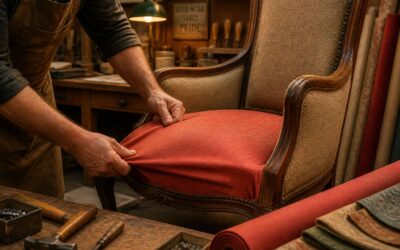
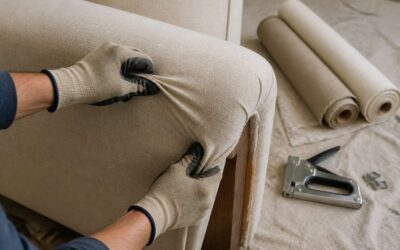
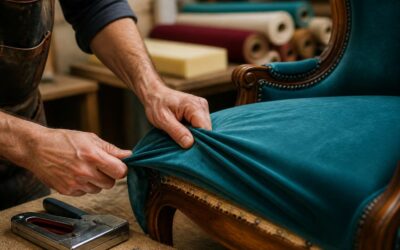
Fitting is the moment of truth! I staple the fabric to the frame, starting at the centre and working outward, pulling enough tension to smooth the surface without distorting the pattern.
- Pleats align with the frame’s symmetry
- Arm rolls stay smooth and wrinkle free
- Back panels sit square with even seams
When you search for furniture reupholstery near me, this cutting, sewing, and fitting phase decides how polished the final piece looks. It is where skill becomes visible.
Final Assembly and Quality Checks
Final assembly brings everything together. I reinstall the legs, reattach the trim, and lower the cushions into their seats. Patience matters here. A crooked welt cord can undo a full day of careful stitching.
Quality checks start with my hands before my eyes. I run a palm along every seam, testing for uneven tension. I check each zipper twice. I measure the pleats against the frame’s symmetry.
For clients searching for furniture reupholstery near me, this stage separates thorough work from rushed work. A proper inspection takes time.
- Every cushion sits flush without gaps.
- All hardware is tightened and aligned.
- The fabric grain follows the frame’s lines.
How to Choose a Professional Upholsterer
Credentials and Experience to Look For
Finding a skilled artisan for furniture reupholstery near me begins with a thorough inspection of their workshop. I always ask about their apprenticeship and the number of years they have spent repairing different frame types. Request to see finished pieces, especially those similar to yours, and examine the seam alignment and edge finishing. Close observation reveals their standards.
Credentials provide additional assurance. Check for these indicators:
- Membership in a professional upholstery association
- Current liability insurance
- A written warranty covering workmanship and materials
Experienced professionals handle unexpected issues, such as broken springs or compromised webbing, with a clear explanation and a fair revised quote. Trust your judgment after meeting them. The ideal provider is transparent, methodical, and proud of their output.
Questions to Ask Before Hiring
Hiring an upholsterer is a leap of faith. The best way to avoid regret is to ask pointed questions before any fabric is chosen. Start with logistics. “How long will this project actually take?” Most professionals give a written timeline, and unexpected delays happen. “What is your policy on change orders?” Matters when you spot a different pattern mid-strip.
Then probe the basics of their craft. Ask how they handle compromised foam or broken springs. A skilled artisan explains the repair process, not just the cost. Also inquire about their cleaning instructions for the finished piece. That reveals their confidence in the materials.
Before you commit, request a detailed breakdown of the quote. It should separate labor, materials, and any frame work. Vague numbers often lead to surprises. And a firm “no” when you ask to see piecework in progress is a red flag.
A list of questions keeps you grounded:
- What happens if the fabric arrives damaged?
- Do you move the piece from my home, or is that extra?
- CanI see a half-finished project in your workshop?
Each answer tells you whether they treat your sofa as a number or a craft. The right upholsterer welcomes scrutiny. They know their work speaks first, and words second. So trust your gut after the conversation, but only after you have asked everything. And if you are searching for furniture reupholstery near me, use these questions as a filter. They separate the dedicated from the careless. That clarity saves you money, time, and heartache.
Reviewing Portfolios and References
A portfolio shows what an upholsterer wants you to see. References show what they hope you never find out. When you search for furniture reupholstery near me, look for someone who offers both without hesitation.
A credible portfolio shows more than finished sofas. Look for photos of stripped frames, re-tied springs, and raw edges. Those reveal the workmanship hidden under the fabric. Ask for references from projects completed at least a year ago. A piece that survived kids, pets, and afternoon sun is the real testimony.
When you contact references, be specific:
– Did the upholsterer protect your floors and walls?
– Did the timeline shift without explanation?
– Would you hire them again?
Check that the workshop has a physical address. A cell number and a WhatsApp line are fine, but a proper workspace suggests stability. A few consistent reviews beat fifty vague ratings. Finding furniture reupholstery near me becomes simpler when the evidence lines up.
Understanding Quotes and Contracts
A quote for furniture reupholstery near me should itemise every metre of fabric and every hour of labour. A proper estimate lists foam density, webbing, and trimming. If a quote says “reupholster sofa” with one vague price, ask them to unpack it. That single line hides every decision you will fight about later.
Contracts deserve the same scrutiny. Look for the fabric supplier, the expected timeline, and the payment schedule. In South Africa, deposits typically land between 50% and 70%. That is normal. What is not normal is a contract that omits what happens if the job runs late or the fabric arrives damaged.
- Confirm the exact fabric name and batch number
- Confirm who pays for additional materials
- Confirm the redo policy if the fit is wrong
A handshake is charming. A signed contract is better.
Cost and Timeline Considerations
Factors That Influence Pricing
The cost of resurrection depends on the bones beneath the fabric. A Victorian sofa with horsehair stuffing and hand tied springs demands more hours than a mid century piece with foam cushions. The timeline stretches accordingly, and no two quotes will ever sing the same tune.
These elements shape the estimate:
– Fabric yardage and grade, from humble cotton to imported velvets
– Frame damage, webbing tears, or sagging coil systems needing replacement
– Ornate details like button tufting, deep pleats, or scalloped edges
The workshop operates on its own clock. A simple dining chair might return within a week, while a wingback heirloom could vanish for a month. When you search for furniture reupholstery near me, ask about the current queue. In Cape Town, skilled upholsterers often book six to eight weeks ahead. That wait feels like a season of mourning, but the finished piece justifies the patience.
Average Cost Ranges by Furniture Type
A dining chair and a Chesterfield sofa share the same workshop, yet their invoices tell different stories. When you search for furniture reupholstery near me, expect the price to follow the piece’s size and complexity.
In Cape Town, average ranges break down like this:
- Dining chair: R800 to R1,500
- Mid century lounge chair: R3,500 to R6,000
- Wingback chair or ottoman: R4,000 to R7,000
- Three seater sofa: R8,000 to R15,000
The timeline follows the same logic. A simple chair may return within a week, while a sofa with hand tied springs can occupy the bench for three weeks or more.
Hidden Fees and Extra Charges
The final invoice arrived R2,300 higher than the quote. That surprise happens more often than it should when you search furniture reupholstery near me! I have seen estimates double once the frame is stripped and the true condition of the piece surfaces.
Hidden fees sit in the details. Frame repairs, new webbing, and foam replacement are rarely included in the base price. Fabric yardage can also exceed the estimate if your chosen upholstery has a large pattern repeat. Delivery and collection often carry separate charges.
Common extras to watch for:
- Replacing damaged springs or seat webbing
- Re-stuffing cushions with new foam
- Additional fabric for pattern matching
- Door-to-door transport fees
Timeline estimates shift for the same reasons. A quote promising two weeks may stretch to five when replacement parts must be sourced. The final total depends on what the upholsterer discovers beneath the old fabric, and no quote can predict that.
Typical Turnaround Times
Most projects take two to six weeks, depending on the workload of the upholsterer you choose. A single dining chair might turn around in days, while a full suite of sofa and armchairs can occupy a workbench for a month or more.
Typical turnaround times break down like this:
- Dining chairs and ottomans: 3 to 7 days
- Armchairs and accent chairs: 1 to 2 weeks
- Sofas and corner units: 2 to 4 weeks
- Full suites: 4 to 6 weeks
Seasonal patterns shift these figures. Demand for furniture reupholstery near me surges after the December holidays, when summer entertaining exposes tired fabric. Winter months bring shorter queues and more negotiable rates. Ask what the timeline includes, because fabric availability can stall progress for a week and frame repairs add days. A skilled upholsterer offering furniture reupholstery near me will provide a staged schedule, not just a completion date.
Ways to Save Money on Reupholstery
The longest wait is often the cheapest way to work. Upholsterers who quote a longer timeline are booking you into their slower months, so their labour rate per hour may drop. Ask for a winter slot and you might shave 10% off the final rand value! Fabric purchasing also affects the schedule. If you buy your own fabric, the upholsterer can’t be blamed for supplier delays, and you control the per-metre cost.
Ways to trim the bill:
- Strip the old fabric yourself and dispose of the debris
- Supply your own foam, webbing, and buttons from a local supplier
- Bundle three or more pieces into a single booking
In my experience, the key is to separate the skilled work from the errands. When you search for furniture reupholstery near me, ask which tasks you can complete without compromising the trade. A craftsman offering furniture reupholstery near me will tell you exactly where your hands help and where they hinder.
Common Upholstery Fabric Options
Natural Fabrics: Cotton, Linen, and Wool
When you search for furniture reupholstery near me, fabric choice determines how your piece ages. Natural fibres behave differently under tension. Cotton offers breathability, yet it creases and fades faster than its counterparts. Linen, woven from flax, resists pilling and grows softer with use, making it a prime choice for frequent seating. Wool, however, brings a self extinguishing quality and remarkable resilience to compression.
- Cotton: absorbent but prone to mildew in humid climates.
- Linen: strong yet susceptible to fraying at seams.
- Wool: naturally flame resistant and moisture wicking.
Professionals in South Africa understand that local humidity and sunlight affect these options. A sofa facing north facing windows will see wool’s UV stability outperform cotton’s tendency to bleach. A burn test reveals more than any swatch in a showroom.
Synthetic Fabrics: Polyester and Nylon
Synthetic fabrics behave differently once the old cover is stripped away! Polyester resists fading and keeps its shape through years of use. Nylon, often blended with wool, offers abrasion resistance that outlasts most natural fibres. When you search for furniture reupholstery near me, ask about solution-dyed acrylics too. I have seen these handle South African coastal humidity remarkably well.
- Polyester: low moisture absorption, quick drying on humid days
- Nylon: high tensile strength, prone to oil-based staining
The key difference from naturals lies in how synthetics react to tension. A staple driven through polyester locks firmly, while nylon can stretch noticeably under heavy weight.
Performance Fabrics for Pets and Kids
When kids and pets share your home, the sofa faces daily duress. Sports drinks, muddy paws, and crayon wax all leave their mark. Standard fabrics absorb these assaults, but performance options reject them outright. I have seen Crypton fabric withstand a month of juice spills without a single stain penetrating its moisture barrier. Solution-dyed acrylic is another tough option. Its colour runs through the fibre, meaning the harsh South African sun won’t fade it.
Your furniture reupholstery near me provider should stock these resilient textiles. Olefin, for instance, resists waterand mildew. A good upholsterer knows which weaves mask pet hair and which backings resist claw snags.
Here are common performance categories to consider:
- Crypton: built-in moisture barrier and stain resistance
- Solution-dyed acrylic: UV stable, ideal for sunny lounges
- Olefin: naturally moisture resistant, quick drying for coastal homes
Leather and Vinyl Considerations
Leather and vinyl offer distinct advantages that fabric cannot match. When you search for furniture reupholstery near me, you will find full grain aniline leather develops a rich patina, while protected leather resists staining. Vinyl provides a leather look at a fraction of the cost, though it lacks breathability. I have seen both options transform tired sofas into striking centrepieces.
Hot South African climates demand careful thought. Full grain leather breathes naturally, making it comfortable in Durban’s humidity. Vinyl can feel sticky against bare skin, but modern embossed vinyls have improved. Both options clean easily and resist pet hair.
A skilled upholsterer inspects the frame first. Leather requires sturdy support, as its weight stresses weaker joints. Vinyl is more forgiving but cracks if foam loses resilience. A furniture reupholstery near me specialist weighs these factors against your household needs.
Matching Fabric to Furniture Style and Usage
Selecting upholstery fabric is an exercise in reading the room. A tufted Chesterfield destined for a formal lounge demands a different textile than a family room recliner that hosts Sunday rugby. When you search for furniture reupholstery near me, I often remind clients to think about how the piece will be used, not just how it should look. That answer shapes everything.
Formal settings suit smooth, tightly woven fabrics that hold crisp lines. Casual spaces allow for textured weaves that hide everyday wear. Consider the chair’s silhouette as well. Low-backed pieces invite relaxed fabrics, while high-backed, ornate frames benefit from something more structured.
- Wingback chair in a study: durable textured weave
- Ottoman in a high-traffic lounge: tightly woven flat fabric
- Antique chaise in a guest bedroom: lighter, breathable textile
Caring for Your Newly Reupholstered Furniture
Routine Cleaning and Maintenance
After your furniture reupholstery near me is complete, the real work of upkeep starts now. Daily care is simple. Vacuum the fabric weekly with a soft brush attachment to prevent dust from settling into the weave. For spills, blot immediately with a clean cloth. Do not rub, as that forces the liquid deeper.
- Rotate loose cushions every two weeks to distribute wear evenly.
- Keep upholstery away from direct sunlight to prevent fading.
- Use a fabric protector spray, but test it on an inconspicuous area first.
Deep cleaning every six months keeps the fibres supple. Steam cleaning works well for synthetic fabrics, while dry cleaning solvents suit natural fibres. Always check the manufacturer’s code. Your investment deserves this gentle attention.
Protecting Against Sunlight and Moisture
South Africa’s ultraviolet rays are merciless. Within months, direct sun can fade a vibrant fabric to a washed-out tone. After your furniture reupholstery near me is complete, placement becomes your primary protection. Keep pieces at least a metre from east and west facing windows, or filter the light with sheer drapes.
Moisture poses a quieter threat. Humid coastal air and unexpected spills penetrate the weave, causing mildew and warping. Avoid setting furniture against exterior walls where condensation collects. In Durban or Cape Town, a dehumidifier helps considerably.
- Rotate the piece periodically to even out sun exposure
- Use coasters and trays for drinks to prevent rings
- Wipe any dampness immediately with a dry cloth
These habits cost nothing, yet they extend the life of your investment. A little vigilance keeps the craftsmanship visible, so you can enjoy the result without premature ageing.
When to Call a Professional for Repairs
The work is done and the fabric is fresh. The real test begins with daily use. In the first weeks, run your hands along seams and edges. This reveals loose stitching before it becomes a tear.
Normal settling produces creases and give in the cushions. That is expected! A sagging seat, a creaking frame, or a wobbly arm is not. These signal structural problems beneath the new fabric.
- Loose or broken springs you can feel when sitting
- Joints that move or squeak under weight
- Rippling fabric that does not smooth out
If you notice any of these, do not wait. A small repair now costs less than a full redo later. Search for furniture reupholstery near me and ask for a frame inspection. A fault caught in the first six months may be corrected under warranty. Later, a qualified technician can set it right, but early intervention protects the work.

0 Comments